
Sep 24, 2026News & Insights
How to Choose a Medical Pendant for an Operating Room
Compare PLDT, PLQJ, PLDQ and PLEMT medical pendant configurations for operating, endoscopy and anesthesia rooms before sending an inquiry.
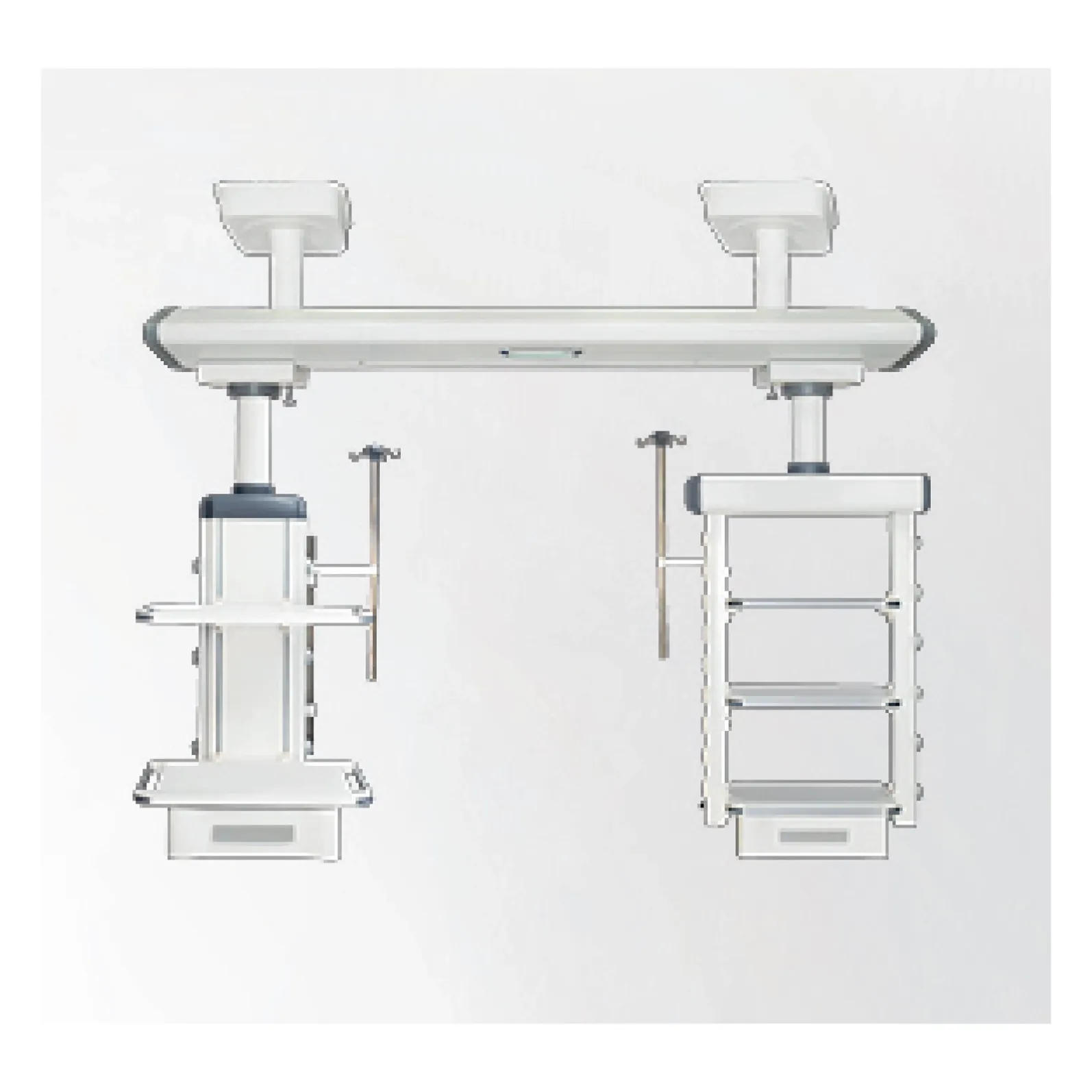
Choosing a medical pendant for an operating room starts with the room workflow, the equipment that must be supported, and the utility connections required at the point of care. A standard single-arm pendant, an endoscopic pendant, a pendant bridge, and an anesthesia pendant may look similar from a distance, but they solve different layout problems. This guide compares four YIKUN Medical configurations so hospital planners and medical equipment distributors can prepare a clearer specification before requesting a quotation.
Start With the Room Workflow, Not the Model Name
A pendant should place power, data, medical gas outlets, instrument platforms, and accessories where staff need them without unnecessarily occupying floor space. Before comparing models, map the normal working positions of the surgical team and the equipment that will connect to the pendant.
Ask four practical questions:
- Is the room mainly used for general surgery, endoscopy, anesthesia, or a multi-station workflow?
- How many platforms and electrical outlets are needed for the equipment list?
- What horizontal reach and rotation are required from the ceiling mounting point?
- Does the project need one terminal unit, a dedicated anesthesia-machine lift, or two service sections on a bridge?
Compare the Four Medical Pendant Configurations
Model | Typical configuration focus | Reach or beam | Rated net load | Platforms | Distinctive feature |
|---|---|---|---|---|---|
PLDT | General single-arm layout | 700–1100 mm customizable arm | ≥220 kg | 2 adjustable platforms, 600 × 450 mm | Compact single-arm arrangement |
PLQJ | Endoscopic equipment layout | 700–1100 mm customizable arm | ≥220 kg | 3 adjustable platforms, 560 × 550 mm | Arm and terminal box can rotate separately or together |
PLDQ | Multi-station pendant bridge | 2500–3000 mm beam, subject to site measurement | ≥450 kg | Bridge with dry and wet service sections | Long beam with LED strip lighting and optional brake |
PLEMT | Anesthesia workstation support | 700–1100 mm customizable arm | ≥220 kg | 2 adjustable platforms, 600 × 450 mm | Electric anesthesia-machine lifting bracket with 300 mm stroke |
All four models are specified for AC110V or 220V, 50 Hz. Gas interfaces can be configured for German, European, or British standards and customized for the project. Final outlet quantities, gas types, mounting details, and interface standards should be confirmed against the hospital's room plan and local requirements.
When a Single-Arm Pendant Is the Practical Choice
The PLDT Single Arm Pendant is a straightforward option when one movable terminal box and two equipment platforms are sufficient. Its horizontal arm range is 700–1100 mm and can be customized. The terminal box rotates from 0° to 340°, while the specified net load is at least 220 kg.
The two adjustable 600 × 450 mm platforms use silicone gel corner protection in an anti-collision design. The listed accessories include ten 10A multi-function power sockets, one network interface, two grounding terminals, one drawer, and one stainless-steel adjustable infusion-pole holder.
This configuration is worth considering when the room needs organized utilities and equipment support but does not require the larger platform area of an endoscopic unit or the dual service sections of a bridge.
When Endoscopy Needs More Platform Space and Rotation Control
The PLQJ Single Arm Endoscopic Pendant adds a third adjustable platform. Each platform is specified at 560 × 550 mm, providing a different equipment arrangement from the two-platform PLDT.
Its horizontal arm and terminal box can rotate separately or simultaneously through a 0°–340° range. That distinction matters when equipment position must be adjusted while keeping other parts of the installation aligned. The model has a specified net load of at least 220 kg and a 700–1100 mm customizable horizontal arm.
Listed accessories include eight 10A power sockets, one network interface, two grounding terminals, one drawer, and a stainless-steel adjustable infusion pole with four bottle hooks. Buyers should compare these outlet and accessory quantities with the actual endoscopy equipment list rather than assuming that every room requires the same setup.
When a Pendant Bridge Fits a Wider Room Layout
The PLDQ Pendant Bridge uses a 2500–3000 mm beam, with the final size determined by on-site measurement. It includes LED strip lighting with 15 lamp beads and has a specified net load of at least 450 kg.
The design separates dry and wet service sections. On the dry section, the power interface is positioned on the rear of the tower body and gas outlets are distributed on both sides. On the wet section, power and gas interfaces are available on both sides. An optional braking device is available to help control drift while allowing equipment to be moved when released.
A bridge can be considered when the room plan calls for broader coverage, separate service zones, or two terminal sections rather than one single-arm terminal box. Because beam length depends on the site, ceiling dimensions and workstation positions should be confirmed early.
When the Anesthesia Machine Needs a Dedicated Lift
The PLEMT Electrical Anesthesia Pendant combines a 700–1100 mm customizable cross arm with an electric anesthesia-machine lifting bracket. The lift has a 300 mm electric stroke. The terminal box rotates through 0°–340°, and the specified net load is at least 220 kg.
It includes two adjustable 600 × 450 mm platforms with silicone gel rounded-corner anti-collision protection. Listed accessories include ten 10A multi-function power sockets, one network interface, two grounding terminals, one stainless-steel adjustable infusion-pole holder, and one drawer.
This model is the most direct candidate of the four when the project specification explicitly requires powered vertical positioning for an anesthesia machine. The equipment dimensions, weight, connection requirements, and desired lift position should still be provided before configuration is finalized.
Information to Prepare Before Requesting a Quotation
A useful inquiry should include more than the room name. Prepare the following information:
- Room type and primary procedures
- Ceiling height and the proposed ceiling mounting point
- Required horizontal reach or bridge length
- Equipment list, dimensions, and weights
- Number and size of required instrument platforms
- Electrical voltage and required socket quantity
- Network and grounding requirements
- Medical gas types, quantities, and interface standard
- Required drawers, infusion poles, bottle hooks, brakes, or lifting functions
- Room plan or marked ceiling drawing, if available
Sharing these details helps the supplier compare the room requirements with the available pendant configurations and identify which items require customization.
Frequently Asked Questions
What is the main difference between PLDT and PLQJ?
PLDT has two 600 × 450 mm adjustable platforms and a general single-arm layout. PLQJ has three 560 × 550 mm adjustable platforms and allows the arm and terminal box to rotate separately or simultaneously. Both specify a customizable 700–1100 mm arm and a net load of at least 220 kg.
When should a hospital consider PLDQ instead of a single-arm pendant?
PLDQ is a bridge configuration with a 2500–3000 mm beam, dry and wet service sections, and a specified net load of at least 450 kg. It is more suitable for a layout that needs wider coverage or separated service zones. Final beam length depends on site measurement.
Which model includes an electric anesthesia-machine lift?
PLEMT includes an electric anesthesia-machine lifting bracket with a 300 mm stroke. Provide the anesthesia machine's dimensions, weight, and connection list before confirming the configuration.
Can the gas and electrical interfaces be customized?
The product specifications state that gas interfaces can be configured for German, European, or British standards and can be customized. Electrical and accessory quantities vary by model. Confirm the exact interface standard, gas types, voltage, outlet quantities, and local project requirements before ordering.
Choose the Configuration From the Room Plan
There is no single medical pendant configuration for every operating room. PLDT supports a compact general single-arm arrangement, PLQJ adds platform capacity and flexible rotation for endoscopy, PLDQ provides a wider bridge layout with separated service sections, and PLEMT adds a dedicated electric anesthesia-machine lift.
Review the complete Medical Pendant product category, then contact YIKUN Medical with your room plan, equipment list, utility requirements, and preferred interface standard for a project-specific discussion.