
News & Insights
Anesthesia Pendant With Electric Lift: What to Check Before Ordering PLEMT
Considering an anesthesia pendant with an electric lift? Check the machine, room layout, service connections and quoted scope against PLEMT's published specifications.
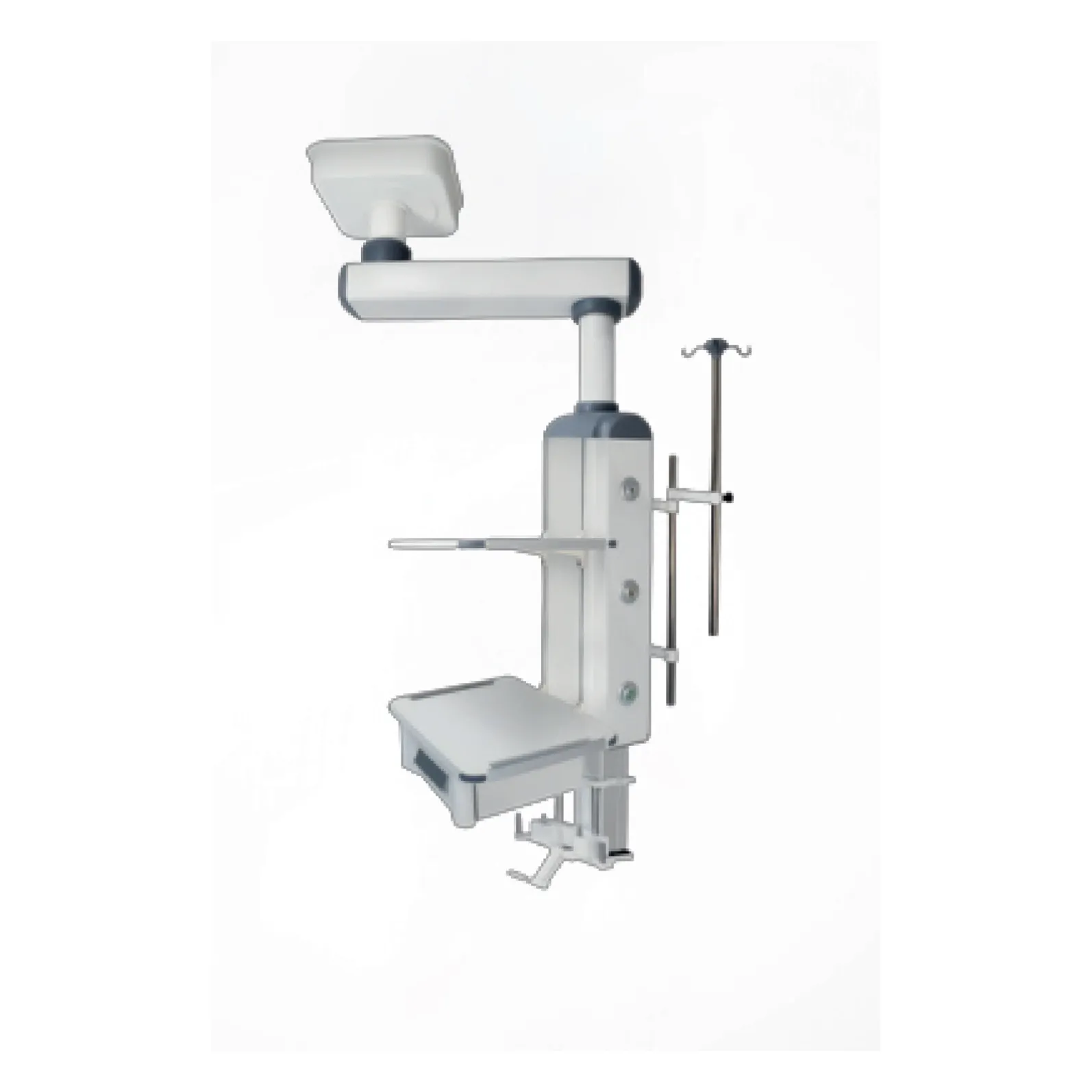
An anesthesia pendant with an electric lift should be specified around the actual anesthesia machine and room plan, not selected from the lifting-stroke figure alone. The PLEMT Electrical Anesthesia Pendant lists a 300 mm electric lifting stroke, a customizable 700-1100 mm cross arm, a net load of at least 220 kg, and two adjustable 600 x 450 mm platforms. Those published specifications help frame an inquiry, but they do not confirm that a particular machine, ceiling position, or utility layout will fit without a project-specific review.
What does the 300 mm lifting stroke actually confirm?
The PLEMT product page identifies an electric lifting bracket for an anesthesia machine and gives its stroke as 300 mm. A stroke is a range of vertical movement. It is not the same as the lowest installed height, the highest installed height, the machine clearance, or a promise that every anesthesia machine can be attached. The published page does not give bracket dimensions, mounting interfaces, travel-end positions, or the height of a machine after installation.
Before asking for a quotation, record the machine's make and model, overall height, width, depth, weight, and any manufacturer-defined lifting or fixing points. Show the height at which staff expect to use it and the clearances needed when it is raised or lowered. Ask the pendant supplier to compare these data with the proposed bracket drawing and to state the resulting installed height range in writing. The hospital's facilities and clinical teams should check the proposed position against other ceiling equipment and the approved room layout.
This is the key difference between checking a feature and checking a configuration: a 300 mm lift describes one component; a usable anesthesia workstation depends on the complete assembly and its surroundings.
Which room measurements affect the proposed position?
PLEMT has a published customizable cross-arm range of 700-1100 mm and a terminal-box rotation angle of 0-340 degrees. These figures do not determine the best ceiling coordinate by themselves. Mark the operating table, anesthesia-machine position, planned pendant mounting point, other ceiling-mounted devices, and the areas where staff and equipment must move. Then identify the working positions the arm should reach and any locations it should avoid.
Include a dimensioned ceiling and floor plan in the inquiry. Note the finished ceiling height and any structural information that the installation team requires. The product page does not specify a universal mounting structure or site-specific ceiling loading; ask the supplier for the mounting drawing and required site information, and have the building's qualified team assess the support arrangement. Do not treat the pendant's stated net load as a ceiling-structure approval.
A practical room review also considers the machine's footprint while it is on the floor and its position across the proposed lift travel. Ask the supplier to mark the machine and bracket at the top and bottom of the travel range on a drawing. That is more useful than assuming the stroke alone gives enough clearance.
How should load, platforms and utilities be specified?
The published PLEMT specification lists a net load of at least 220 kg and two height-adjustable 600 x 450 mm instrument platforms. It also lists ten 10A multi-function power sockets, one network interface, two grounding terminals, an adjustable stainless-steel infusion-pole holder, and a drawer. The working supply is stated as AC110V or 220V at 50 Hz. Gas interfaces are described as configurable for German, European, British and other standards.
Make a short equipment and utility schedule rather than copying these figures straight into a purchase order:
Item to check | Information to provide or request |
|---|---|
Lifted machine | Make, model, dimensions, weight, fixing points and desired use height; request bracket compatibility and the installed height range. |
Other supported equipment | Dimensions and weights of devices intended for each platform; request a confirmed load arrangement for the quoted assembly. |
Electrical supply | Destination voltage and frequency, plug/socket requirements and the quantity of powered devices; confirm the exact quoted socket configuration. |
Data and grounding | Required network location and grounding schedule; confirm what is included and what the hospital must provide. |
Medical gas | Required gas types, outlet counts and interface standard; request a marked outlet drawing for the destination project. |
The table is an inquiry checklist, not an installation specification. The published 220 kg net-load figure should not be interpreted as permission to place that weight anywhere on the lift or platforms. Ask for written clarification of bracket and platform load limits and the scope of the rating for the selected configuration.
If the project does not require a powered machine lift, the PLDT Single Arm Pendant is a separate two-platform model to compare. Its published page lists a customizable 700-1100 mm arm, at least 220 kg net load and two 600 x 450 mm platforms, but does not list an anesthesia-machine lifting bracket. Do not assume PLDT includes the PLEMT lift or that the two products have interchangeable mounting parts.
What should the supplier confirm in the quotation?
Send the machine schedule, room drawing and utility list together. Ask for one response that identifies the exact PLEMT configuration, bracket interface, lift travel and installed height range, proposed arm length, platform positions, gas-outlet schedule, electrical and network arrangement, accessories, mounting drawing and any items to be supplied by the hospital. Mark each line as included, optional, site-supplied or still to be confirmed.
The point is to make the quotation auditable. A product page can show the available design; the quotation must show what this project will receive. Compare the response with the hospital's equipment and installation requirements before an order is finalized. To explore other layouts, see the Medical Pendant range. For a project-specific proposal, contact YIKUN Medical with your machine details, room plan and utility schedule.
Frequently asked questions
Does the 300 mm stroke tell us the machine's final height?
No. It states the lift's travel, not the installed top or bottom position. Request an assembly drawing showing the proposed machine at both travel limits.
Can we use the 220 kg figure as the anesthesia-machine limit?
Do not assume so. The page calls it a net-load specification, but does not break it down by lifting bracket and platforms. Ask the supplier to confirm the permitted load distribution for the exact configuration.
Is the 700-1100 mm arm length fixed?
The PLEMT page describes this range as customizable. Send the intended mounting point and working positions so the proposed length can be checked against the room plan.
Are gas outlets and electrical connections identical for every project?
The page lists standard accessories and says gas-interface standards can be customized. Confirm the destination voltage, gas types, outlet quantities and interface standard in the written offer.
What is the first document an overseas buyer should send?
Send a dimensioned room plan together with the anesthesia-machine make, model, size and weight. Add the electrical, network, grounding and gas schedule through the Contact Us page.