
How to Tell the Quality of a Medical Pendant
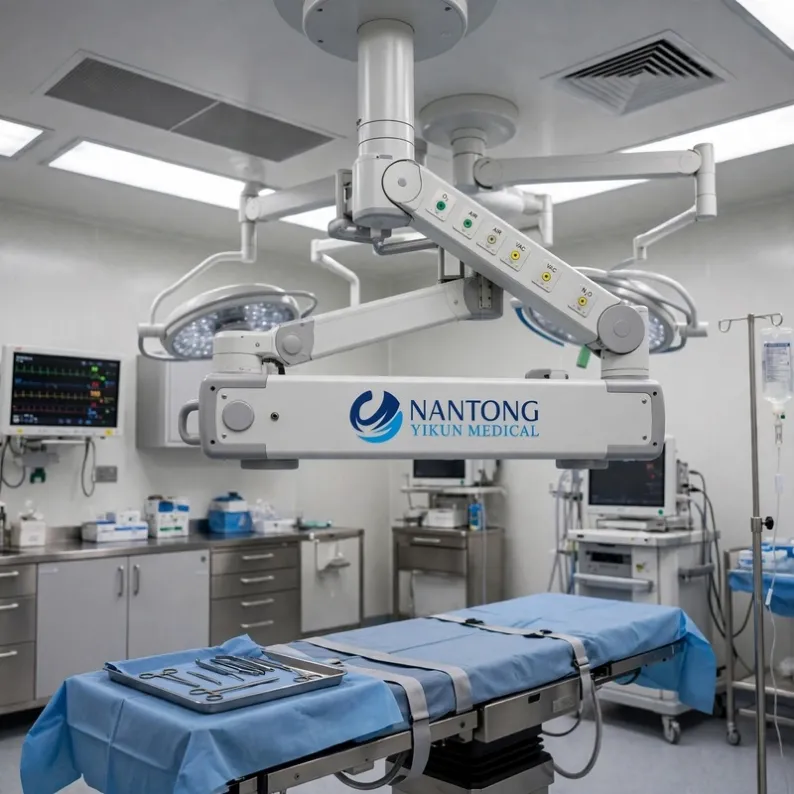
A medical pendant hangs above the operating table and carries the things a surgical team cannot do without: medical gas outlets, power sockets, and the equipment that has to be within reach at all times. When it works well, nobody notices it. When it does not, the whole room feels it. So before buying one, it is worth knowing how to tell a good pendant from a poor one.
Start with the build. A pendant is a piece of equipment that will be moved, loaded and cleaned every day for years. Look at the materials and the finish: the structure should feel solid, the surfaces should be easy to clean, and the welds and joints should be neat and even. A pendant that looks well made usually is; a pendant with rough edges and loose fittings is telling you something before it is even installed.
Next, move the arm. A pendant arm should move smoothly and hold its position exactly where the team leaves it. If it drifts, sags, or needs force to move, it will fight the surgical team at the worst possible moment. Ask to see the arm moved through its full range and left in place — a good pendant stays put.
Then check what it carries. Look at the gas outlets and electrical sockets: are they the types the hospital actually uses, are they clearly arranged, and are they protected? A pendant that cannot supply the room's gas and power needs is not a bargain at any price. The layout should match how the team works, not force the team to work around it.
Certifications matter too. A pendant for a hospital should come from a manufacturer that can show recognised certifications for its products and its quality management, such as CE and ISO. These are not decorations. They are evidence that the product has been tested and that the factory works to a documented standard. Ask to see them.
Finally, look at the manufacturer behind the pendant. How long has it been making operating-room equipment? Can it supply spare parts and after-sales support when the pendant has been in service for years? A pendant is a long-term installation, and the supplier should still be there when it needs attention.
A good pendant is not the cheapest one. It is the one that is solidly built, moves smoothly, holds its position, supplies what the room needs, carries proper certification, and comes from a manufacturer with a track record. Check those six things, and the quality will show itself.